


Helen Ficalora


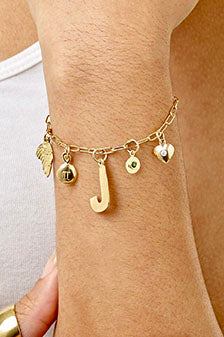
Solid Gold vs. Gold-Plated Initial Jewelry: What's the Real Difference?
Two initial necklaces can look nearly identical online and behave completely differently on your neck six months later. The difference usually comes down to one thing: whether the piece is solid gold all the way through, or gold plated over a different base metal. Here's how to tell them apart before you buy.
What "Solid Gold" Actually Means
Solid gold jewelry is made from a gold alloy — commonly 14k, meaning 58.3% pure gold mixed with other metals for strength — from the outside in. There is no separate coating to wear away. Every Helen Ficalora alphabet charm is cast in solid 14k gold, so the color and metal content are consistent at any point on the piece, including after years of daily wear.
What "Gold Plated" Actually Means
Gold-plated jewelry starts with a base metal — often brass, copper, or silver — and adds a thin layer of gold on the surface through electroplating. That layer can range from extremely thin (standard plating) to a thicker, longer-lasting layer (gold vermeil, which uses a sterling silver base). Either way, the gold is a coating, not the material itself.
Solid Gold vs. Gold Plated: Side-by-Side Comparison
| Factor | Solid 14k Gold | Gold Plated |
| Composition | Gold alloy throughout | Base metal core with gold surface layer |
| Everyday durability | Holds up to years of daily wear | Surface layer thins with wear over time |
| Water and skin contact | Generally unaffected | Can accelerate wear of the plating |
| Long-term appearance | Consistent gold tone | Base metal can eventually show through |
| Typical price point | Higher upfront cost | Lower upfront cost |
| Best for | Daily-wear, heirloom pieces | Occasional-wear, trend pieces |
Why the Difference Matters for Initial Jewelry Specifically
Initial necklaces are typically worn every single day, which is exactly the kind of use that exposes the weaknesses of plating fastest. A piece meant to represent a name or a person you love loses some of its meaning if the surface starts to fade within a year. That's part of why personalized jewelry, more than almost any other category, tends to be worth the investment in solid metal.
How to Tell the Difference When Shopping
- Read the product description carefully. Reputable brands disclose whether a piece is solid, filled, or plated.
- Check the price relative to the category. Solid 14k gold has a materials cost that plated pieces don't carry.
- Look for hallmarks. Solid gold pieces are typically stamped with a karat marking, such as "14K."
- Ask about the base metal. If a listing doesn't specify what's underneath the gold layer, that's worth asking about directly.
Key Takeaways
- Solid gold is gold alloy throughout; plated jewelry is a gold layer over a different metal.
- Plated pieces wear faster with the daily contact typical of initial necklaces.
- Solid 14k gold generally offers better long-term value for pieces meant to be worn constantly.
- Karat hallmarks and transparent product descriptions help confirm what you're buying.
Frequently Asked Questions
Does gold-plated jewelry turn colors?
Over time, as the plating wears thin, the base metal underneath can begin to show through, which may change the piece's color or shine.
Is gold vermeil the same as gold plating?
Gold vermeil is a specific type of plating that uses sterling silver as the base metal, generally with a thicker gold layer than standard plating, but it is still not solid gold.
Can I shower or swim in solid gold jewelry?
Solid gold generally tolerates water contact well, though it's still good practice to remove fine jewelry before swimming in chlorinated water or using harsh soaps.
Why is solid gold more expensive?
The higher price reflects the actual gold content used throughout the piece, rather than a thin surface layer over a less expensive metal.
Is 14k gold considered solid gold?
Yes. 14k refers to the purity of the gold alloy itself, not a coating, making it a solid gold designation.
Will solid gold initial jewelry last a lifetime?
With basic care, solid 14k gold is durable enough to be worn daily for decades, which is why it's often chosen for pieces meant to become keepsakes.
Is it worth paying more for solid gold on a small charm?
For a piece meant to be worn every day and possibly passed down, most people find the extra cost worthwhile compared to replacing a plated piece as it wears.
Conclusion
Solid gold and gold-plated jewelry can look nearly identical on day one, but only one is built to represent your name for years to come. If you're choosing a piece meant to last, the Alphabet Charms collection is crafted entirely in solid 14k gold, with no plating involved.